Chromatic Holographic Digital Papers: A Vibrant Resource for Creative Professionals
For designers, marketers, and content creators who appreciate dynamic visual appeal, Chromatic Holographic Digital Papers offer a compelling solution. These digital assets combine eye-catching holographic effects with vibrant color palettes to create backgrounds and design elements that stand out in both print and digital formats. With 38 high-resolution JPEG images included in one ZIP file, they’re versatile enough for a wide range of applications—from website headers to business cards and beyond.
Understanding the Design and Technical Specifications
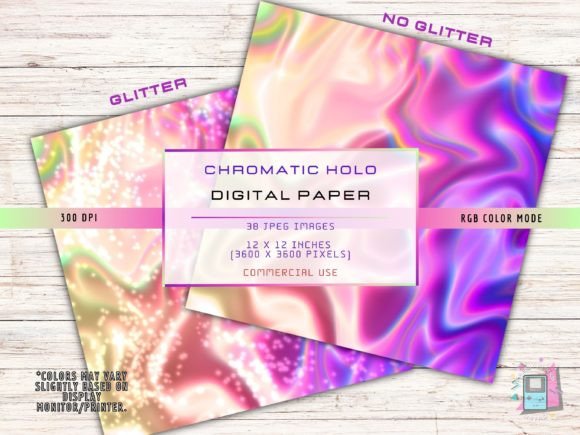
At their core, these digital papers are crafted to deliver a sense of movement and depth through simulated chromatic and holographic patterns. Each image is rendered at 300 DPI resolution, ensuring sharp detail and clarity even when printed. The RGB color mode makes them ideal for digital displays, where accurate color representation is crucial. With dimensions of 12 x 12 inches (3600 x 3600 pixels), each paper provides ample space for creative use without compromising quality or requiring excessive resizing.
The collection includes two versions—glitter and no glitter—which adds flexibility depending on the desired aesthetic. Whether you want a subtle shimmer or a bold iridescent effect, there’s an option that suits your project's needs. This attention to variation shows the designer's intent to cater to different tastes and practical requirements.
Purpose and Practical Applications
These papers are particularly well-suited for projects where visual impact is key. For instance, as background textures in websites or social media graphics, they can elevate the perceived professionalism and modernity of the design. Bloggers might use them as page dividers or section headers to break up content while maintaining a cohesive theme. Educators could incorporate them into presentation slides or handouts to add a layer of interest and engagement.
Small business owners may find them useful for branded materials like invitations, packaging designs, or promotional flyers. Their high resolution supports professional printing, so they can be used effectively in physical products too. Freelancers and entrepreneurs working across multiple platforms can benefit from having a consistent yet adaptable set of design assets to maintain brand identity without sacrificing creativity.
Evaluating Quality and Usability
Quality is a strong suit of this product. The files are clean, well-optimized, and free from compression artifacts that often plague low-quality JPEGs. When using them in Adobe Photoshop or Illustrator, the resolution allows for precise editing and layering. Similarly, in graphic design tools like Canva or Figma, they perform reliably without slowing down performance due to large file sizes.
Usability is further enhanced by the uniform size and format of all images. This consistency simplifies workflow integration, especially when creating a series of related materials. There’s no need to adjust dimensions for most common uses, which saves time and reduces errors. Additionally, the JPEG format ensures broad compatibility across software and devices, eliminating the need for special plugins or conversions.
Strengths and Limitations
One of the standout strengths of Chromatic Holographic Digital Papers is their adaptability. The holographic visuals can be layered with other design elements to add dimensionality or serve as standalone backgrounds for minimalist layouts. They also work well in both dark and light color schemes, making them suitable for a variety of themes and industries.
However, it's important to consider their limitations. While the files are high resolution, they may not be appropriate for every type of project. For example, if your design requires transparency or intricate vector-based overlays, PNG or SVG formats would be more suitable. Also, because these are pre-made JPEGs, users seeking fully customizable holographic effects may prefer editable source files, such as those in PSD or AI formats.
Who Benefits Most from These Papers?
Creative professionals who value efficiency and aesthetic appeal will likely find these papers beneficial. Marketers looking to refresh their campaign visuals can use them to create attention-grabbing banners or email headers. Entrepreneurs building a brand identity may integrate them into templates for packaging, brochures, or website sections. Bloggers and publishers can enhance their editorial layouts with these visually rich backgrounds, adding a touch of sophistication to digital magazines or themed blog posts.
Designers working in branding, packaging, or web development may also appreciate the ready-to-use nature of these assets. They can streamline repetitive tasks like creating event posters, social media assets, or landing pages. Educators and presenters could use them to make learning materials more engaging, particularly in subjects like art, science, or technology where visual stimulation plays a role.
Realistic Use Cases and Professional Observations
In practice, I've found these papers to be effective when used as accents rather than dominant features. For example, applying a holographic texture subtly behind text in a brochure helped draw focus to the content while still providing a modern feel. On a website mockup, one of the brighter variations worked well as a hero section background, complementing a tech startup’s innovative brand message.
I’ve also used them in print for small-batch merchandise like greeting cards and stickers. The 300 DPI resolution held up well during printing, and the colors remained vivid and true. However, I noticed that certain lighting conditions made the printed holographic effect less visible than expected. If the goal is to replicate the full visual impact seen on screen, digital-only use is recommended.
A limitation worth noting is that these papers may not blend seamlessly with all design styles. For projects with a vintage or minimalist aesthetic, the overtly futuristic look of some patterns could clash. It’s best to preview how they interact with your existing design palette before finalizing any layout.
Flexibility and Long-Term Value
Flexibility is another area where these papers shine. Beyond standard use cases, they can be creatively manipulated. Adding a gradient overlay in post-processing softens the intensity of the holographic effect, allowing it to blend more naturally with photographs or illustrations. Cropping them to smaller sizes or tiling them for larger surfaces maintains their integrity, thanks to the seamless repetition in many of the designs.
Over time, the long-term value becomes apparent. As trends shift toward more interactive and visually stimulating content, having access to holographic-style assets keeps your portfolio and marketing materials current. They’re also a valuable addition to a stock of design resources that can be reused across multiple client projects or personal ventures.
Recommendations for Effective Use
To get the most out of Chromatic Holographic Digital Papers, start by selecting a few that align with your project’s color scheme and mood. Test them in your preferred design tool at actual size to ensure they meet your expectations in terms of scale and clarity. Consider using them in layered compositions to balance their intensity with other design elements.
If you're designing for print, always verify the output under various lighting conditions. Some holographic effects may appear differently depending on the printer and paper stock used. For digital applications, ensure that the colors display consistently across different screens and browsers.
Another tip is to avoid overusing them in a single project. Too many holographic elements can overwhelm the viewer and dilute the overall message. Instead, use them strategically to highlight key areas or evoke a specific emotion.
Conclusion and Final Thoughts
Chromatic Holographic Digital Papers provide a unique combination of visual flair and technical quality. They’re a practical resource for anyone involved in graphic design, branding, or content creation who wants to introduce a modern, multidimensional element into their work. While they aren’t a universal solution, they do offer considerable versatility and value when applied thoughtfully.
Before purchasing, consider whether your workflow benefits from ready-made, high-quality digital assets. If you're looking to save time while maintaining a polished, contemporary look, these papers are worth exploring. They’re especially useful for digital-first projects where color vibrancy and visual interest can make a significant difference in audience engagement.